Personality Type Explained
According to Carl G. Jung's theory of psychological types [Jung, 1971], people can be characterized by their preference of general attitude:
- Extraverted (E) vs. Introverted (I),
their preference of one of the two functions of perception:
- Sensing (S) vs. Intuition (N),
and their preference of one of the two functions of judging:
- Thinking (T) vs. Feeling (F)
The three areas of preferences introduced by Jung are dichotomies (i.e. bipolar dimensions where each pole represents a different preference). Jung also proposed that in a person one of the four functions above is dominant – either a function of perception or a function of judging. Isabel Briggs Myers, a researcher and practitioner of Jung’s theory, proposed to see the judging-perceiving relationship as a fourth dichotomy influencing personality type [Briggs Myers, 1980]:
- Judging (J) vs. Perceiving (P)
The first criterion, Extraversion – Introversion, signifies the source and direction of a person’s energy expression. An extravert’s source and direction of energy expression is mainly in the external world, while an introvert has a source of energy mainly in their own internal world.
The second criterion, Sensing – Intuition, represents the method by which someone perceives information. Sensing means that a person mainly believes information he or she receives directly from the external world. Intuition means that a person believes mainly information he or she receives from the internal or imaginative world.
The third criterion, Thinking – Feeling, represents how a person processes information. Thinking means that a person makes a decision mainly through logic. Feeling means that, as a rule, he or she makes a decision based on emotion, i.e. based on what they feel they should do.
The fourth criterion, Judging – Perceiving, reflects how a person implements the information he or she has processed. Judging means that a person organizes all of his life events and, as a rule, sticks to his plans. Perceiving means that he or she is inclined to improvise and explore alternative options.
All possible permutations of preferences in the 4 dichotomies above yield 16 different combinations, or personality types, representing which of the two poles in each of the four dichotomies dominates in a person, thus defining 16 different personality types. Each personality type can be assigned a 4 letter acronym of the corresponding combination of preferences:
| ESTJ | ISTJ | ENTJ | INTJ |
| ESTP | ISTP | ENTP | INTP |
| ESFJ | ISFJ | ENFJ | INFJ |
| ESFP | ISFP | ENFP | INFP |
The first letter in the personality type acronym corresponds to the first letter of the preference of general attitude - “E” for extraversion and “I” for introversion.
The second letter in the personality type acronym corresponds to the preference within the sensing-intuition dimension: “S” stands for sensing and “N” stands for intuition.
The third letter in the personality type acronym corresponds to the preference within the thinking-feeling pair: “T” stands for thinking and “F” stands for feeling.
The forth letter in the personality type acronym corresponds to a person’s preference within the judging-perceiving pair: “J” for judging and “P” for perception.
For example:
- ISTJ stands for Introverted, Sensing, Thinking, Judging
- ENFP stands for Extraverted, iNtuitive, Feeling, Perceiving

What is your personality type? Take the Test!
What do percentages next to the personality type words or letters mean?
Humanmetrics Jung Typology Test™ (JTT™) and Jung Typology Profiler for Workplace™ (JTPW™) instrument determine the expressiveness of each of the four personality type dimensions (Extraversion vs. Introversion, Sensing vs. Intuition, Thinking vs. Feeling, and Judging vs. Perceiving.)
In JTT™ and JTPW™, the scales of these four dimensions represent a continuum between two opposite poles, from 100 at one pole to 100 at another pole. I.e. Extravert-Introvert dimension is a continuum from 100 on Extraversion (i.e. respondent is a 100% extravert) to 100 on Introversion (i.e. respondent is a 100% introvert). In other words the scale is 200 units long:
Extravert [100% - - - 0% - - - 100%] Introvert
People may reveal features of both poles but typically have a preference of one way over the other. The letter indicates the preference and the percentage indicates the extent of it.
The E-I score of 0% means the respondent is at the borderline between being an extravert and an introvert. Having Extraversion score of greater than 0 - e.g. 20% - means being 20% more slanted toward Extraversion over Introversion. Having Introversion score of greater than 0 - e.g. 20% - means being 20% more slanted toward Introversion over Extraversion.
The same pertains to the S-N, T-F, and J-P dichotomies.
The Basics of Jung's Typology
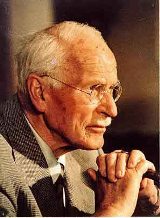 Jung called Extraversion-Introversion preference general attitude, since it reflects an individual’s attitude toward the external world distinguished by the “direction of general interest” [Jung, 1971]: the extravert maintains affinity for, and sources energy from the outer world, whereas the introvert is the other way around – their general interest is directed toward their inner world, which is the source of their energy.
As mentioned above, Jung introduced a pair of judging functions - thinking and feeling - and a pair of perception functions – sensing (or “sensation”), and intuition.
Sensing-Intuition preference represents the method by which one perceives information: Sensing means an individual mainly relies on concrete, actual information - “in so far as objects release sensations, they matter” [1], whereas Intuition means a person relies upon their conception about things based on their understanding of the world. Thinking-Feeling preference indicates the way an individual processes information. Thinking preference means an individual makes decisions based on logical reasoning, and is less affected by feelings and emotions. Feeling preference means that an individual's base for decisions is mainly feelings and emotions.
Jung introduced the idea of hierarchy and direction of psychological functions. According to Jung, one of the psychological functions - a function from either judging or perception pair – would be primary (also called dominant). In other words, one pole of the poles of the two dichotomies (Sensing-Feeling and Thinking-Feeling) dominates over the rest of the poles. The Extraversion-Introversion preference sets the direction of the dominant function: the direction points to the source of energy that feeds it – i.e. to the outer world for extraverts and to the inner world for introverts.
Jung suggested that a function from the other pair would be secondary (also called auxiliary) but still be “a determining factor” [Jung, 1971]. I.e. if Intuition is dominant, then the auxiliary one is either Thinking or Feeling. If Sensing is dominant, then the auxiliary one can also be either Thinking or Feeling. However, if Thinking is dominant, then the auxiliary one is either Sensing or Intuition, and if Feeling is dominant then the auxiliary one is either Sensing or Intuition. In other words, the auxiliary function never belongs to the same dichotomy.
Jung called feeling and thinking types “rational” because they are characterized by the dominance of judging functions that provide reasoning rationale (be it thinking or feeling). “Rational” or Judging preference results in thinking, feelings, response and behaviour that consciously operate in line with certain rules, principles or norms. People with dominant "rational" or judging preference perceive the world as an ordered structure that follows a set of rules.
He called sensing and intuitive types “irrational” because they are characterized by dominance of the functions of perception (either sensing or intuition), and therefore their “commissions and omissions are based not upon reasoned judgment but upon the absolute intensity of perception” [Jung, 1971]. “Irrational” or Perceiving preference operates with opportunities, i.e. with a range of possible outcomes that result from assumed premises or from sensations, mostly driven by the unconscious processes. People with dominant "irrational" or Perceiving preference see the world as a structure that can take various forms and outcomes. It is possible to determine, either by observation or by asking certain questions, preference of Judging vs. Perceiving and the strength thereof in a person.
References
- Jung, C. G. (1971). Psychological types (Collected works of C. G. Jung, volume 6, Chapter X)
- Briggs Myers, I. (1980, 1995) Gifts Differing: Understanding Personality Type